Gd. K. Kampus UNJ, Jl. Rawamangun Muka Jakarta Timur
dekan-fis@unj.ac.id
Eurasia Lecturer Series 2026 Discusses Ethical Challenges and Governance in the Digital Era
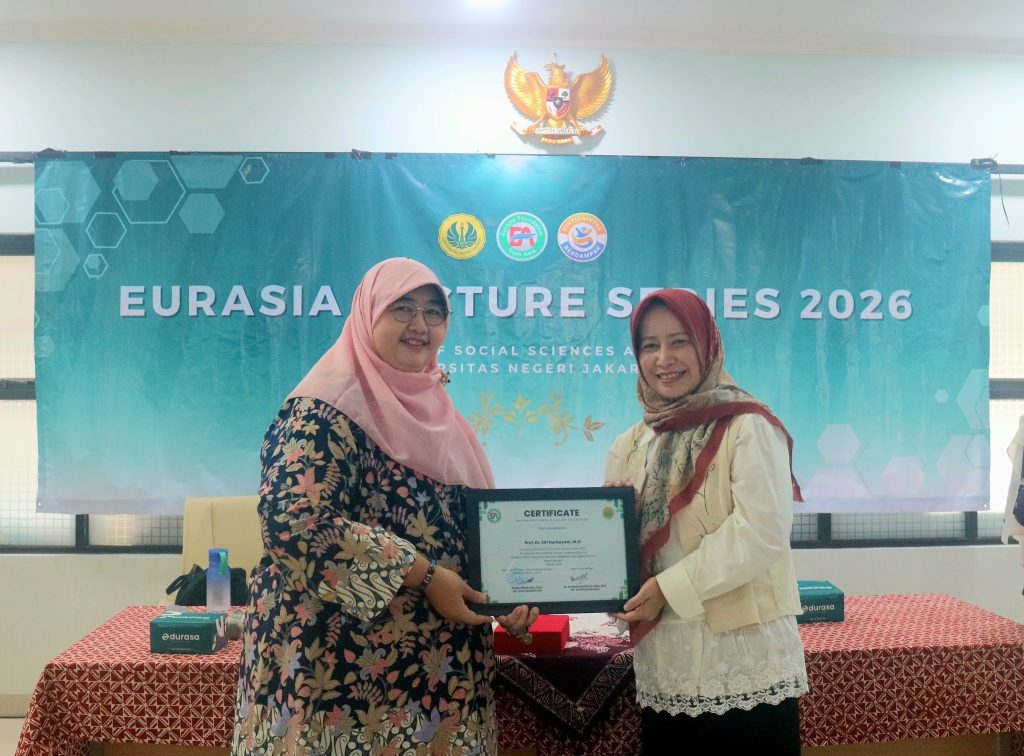
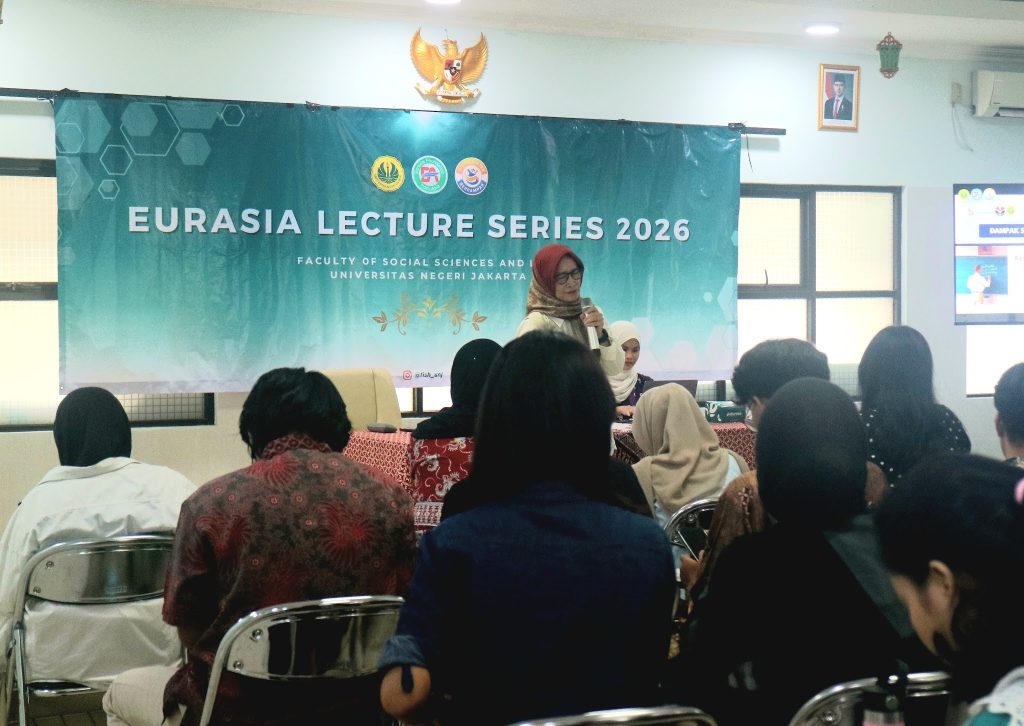
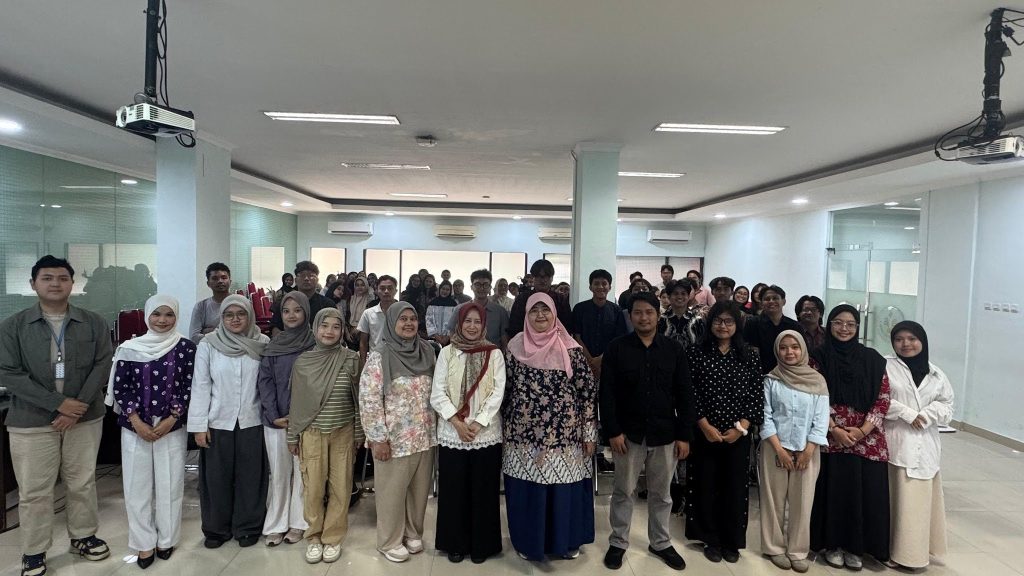
Jakarta, 18 Mei 2026 — The Eurasia Lecturer Series 2026 continued its academic discussion with its ninth session, carrying the theme “Ethical Challenges and the Problem of Governance in Digital Society: Privacy Concerns and Data Security in a Digital World.” The session featured Prof. Dr. Siti Nurbayani, M.Si., Director of Student Affairs at Universitas Pendidikan Indonesia (UPI), as the keynote speaker. She discussed various ethical challenges emerging from the rapid development of today’s digital society.
In her first presentation, titled “Who Controls Your FYP? Algorithms, Ethics, and Human Autonomy in the Digital Era,” Prof. Siti explained that the development of algorithms, social media, and artificial intelligence (AI) has significantly influenced human behavior and ways of thinking in the digital age. According to her, technology today does not only assist human activities, but also has the potential to systematically shape users’ preferences and habits.
“Algorithms do not only understand our preferences, but also record, predict, and standardize physical behavior on a massive scale without coercion,” Prof. Siti stated during the discussion session.
She further explained that algorithms operate as a mechanism of control through three main stages: knowing, which records users’ activities; predicting, which calculates and predicts the probability of behavior; and shaping, which aggressively delivers content to users. This condition raises various ethical concerns in the digital lives of modern society.
In the next part of the presentation, Prof. Siti encouraged students to understand the importance of 21st-century skills in responding to the challenges of digital society. She highlighted the 4C concept, consisting of critical thinking, collaboration, creativity, and communication. These skills are considered essential for enabling society to respond to technological development in a more critical, ethical, and responsible manner.
At the end of the session, Prof. Siti opened a discussion and question-and-answer session with the students. Two students raised questions regarding the influence of algorithms in social contexts and their relevance to the geopolitical situation in Indonesia today.
In response, Prof. Siti emphasized the importance of applying five pillars of digital governance: autonomy, privacy, justice, transparency, and accountability. Through this understanding, students are expected to use technology more wisely, without losing control over themselves, while positioning technology as a supportive tool in solving problems, including the issues raised by the students during the discussion.