Eurasia International Course 2026 Session 8 Discusses the Meaning of a New Community Amid Global Change
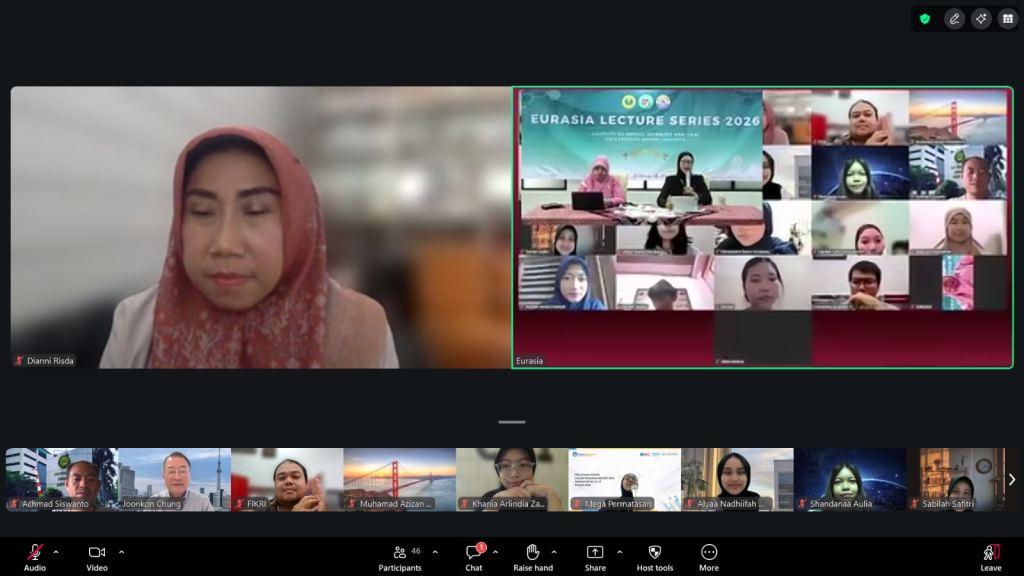
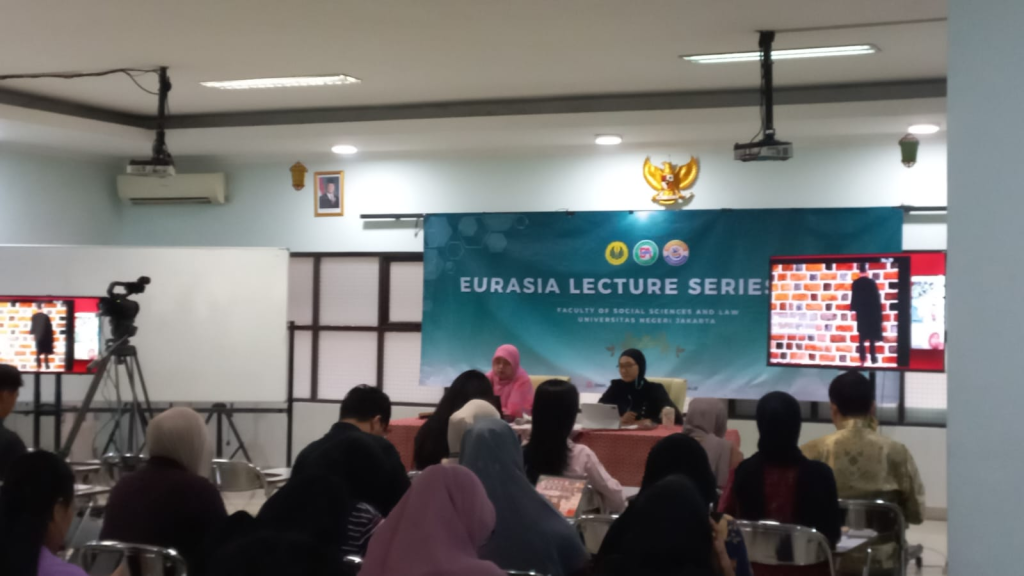
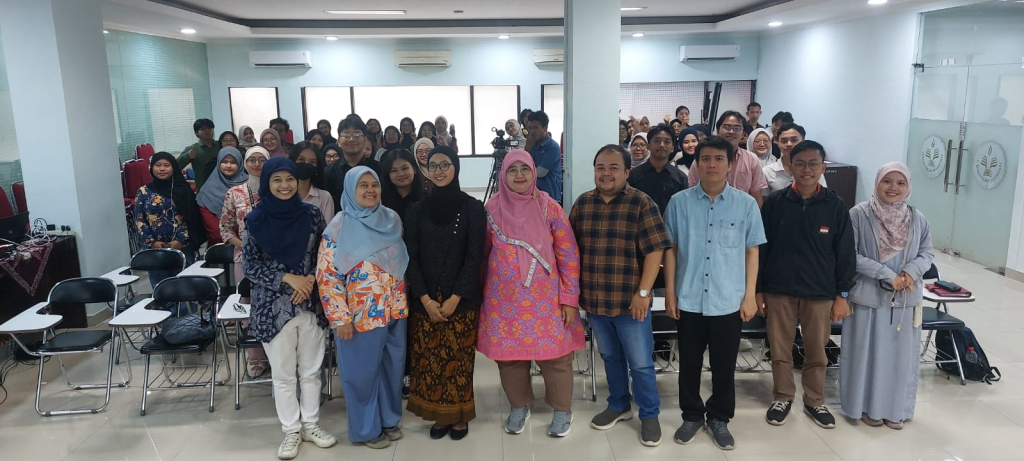
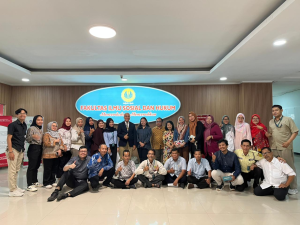
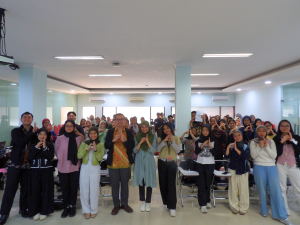
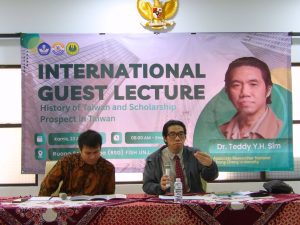
Jakarta, 4 Mei 2026 — The Faculty of Social Sciences and Law, Universitas Negeri Jakarta (FISH UNJ), continued The Eurasia International Course 2026 through its eighth session, carrying the theme “Towards a New Community: Its Necessity & Meaning.” The session featured Prof. Chung Joon Kon from the Eurasia Foundation as the keynote speaker and was moderated by Mega Ayu Permatasari, M.Si. The event was held in a hybrid format, with participants attending onsite at the Multipurpose Room, Building K, FISH UNJ, while others joined virtually.
In this session, Prof. Chung Joon Kon invited participants to reflect on the meaning of community in human life and in today’s changing world. He began his presentation by introducing the Eurasia Foundation as an institution committed to contributing to the elimination of global conflict and the creation of a harmonious and peaceful society. Through the principles of openness, freedom of thought, freedom of belief, and non-involvement in political interests, the Eurasia Foundation emphasizes the importance of dialogue across nations, cultures, and humanitarian values.
Prof. Chung explained that humans essentially engage in two main social activities: possession and relationship. Possession is related to needs, desires, technological development, and the creation of prosperity. Meanwhile, relationship is connected to order, harmony, organizational progress, and the formation of community. According to him, technological advancement and wealth alone are not enough to build a shared life if they are not balanced with healthy, open, and peace-oriented social relations.
One of the key ideas highlighted in the session was the need to understand a new community as a response to old boundaries created by humanity. Prof. Chung used the metaphor of a “wall” to describe internal and systemic boundaries that may separate individuals, societies, and nations. These boundaries are not only physical but also exist in ways of thinking, social structures, political systems, and perceptions of identity. Therefore, building a new community means striving to move beyond these barriers through broader, more inclusive, and more human-centered understanding.
In his presentation, Prof. Chung also encouraged participants to understand community through three perspectives: time, space, and human beings. These three elements are essential in examining how social relations are formed and transformed. Changes in time, shifts in the spaces of life, and the dynamics of human relationships require new ways of understanding the world. In an era of rapid global change, community can no longer be understood only within local or national boundaries, but must also be seen as a shared space that enables the exchange of ideas, cultures, and humanitarian values.
The discussion became even more engaging when Prof. Chung emphasized the importance of understanding Asia and the world through diverse perspectives. He underlined that moving towards a new community requires the ability to “graduate” or move beyond old and narrow ways of thinking. In the context of Eurasia, participants were invited to see the region as a vast space with rich history, population, culture, and potential for relations among nations. With such diversity, Eurasia can become an important point for building a more dialogic and inclusive global awareness.
Prof. Chung also connected his ideas to the concept of the state and its citizens. He explained that the state is essentially an artificial product created by humans to ensure life, liberty, and collective security. However, when the world faces new needs, humanity must also consider new forms of community that are able to respond to contemporary challenges. In this regard, the idea of a new community is not intended to reject the existence of the state, but rather to restore the state to its fundamental role: protecting human life and creating conditions that allow people to live more freely, comfortably, peacefully, and happily.
Through the example of the 2011 Tohoku Earthquake and the Fukushima accident, Prof. Chung showed that issues involving the state, citizens, and human life often become increasingly complex in times of major crisis. Such events demonstrate that humanitarian challenges cannot always be solved solely through administrative boundaries or rigid state systems. Solidarity, openness, and collective awareness are needed to build communities capable of responding to cross-border issues.
Mega Ayu Permatasari, M.Si., as moderator, and Dr. Dianni Risda, S.Pd., M.Ed., as the Japanese language translator, guided the discussion interactively. Their roles helped participants understand the key ideas delivered by the speaker within academic and social contexts that were closely related to everyday life. The hybrid format also provided broader opportunities for participation, both for those attending in person and those joining online.
The eighth session of The Eurasia International Course 2026 became part of FISH UNJ’s ongoing efforts to broaden the global perspectives of students and the academic community. Through the theme of a new community, this session not only discussed relations among nations but also invited participants to rethink the role of human beings in building a more peaceful, inclusive, and meaningful world. The session emphasized that the community of the future must be built by respecting diversity, opening spaces for dialogue, and moving beyond the old walls that limit shared human life. []