Gd. K. Kampus UNJ, Jl. Rawamangun Muka Jakarta Timur
dekan-fis@unj.ac.id
Digitalization Brings History to Life: Eurasia International Course 2026 Discusses the Transformation of Historical Artifacts’ Meaning
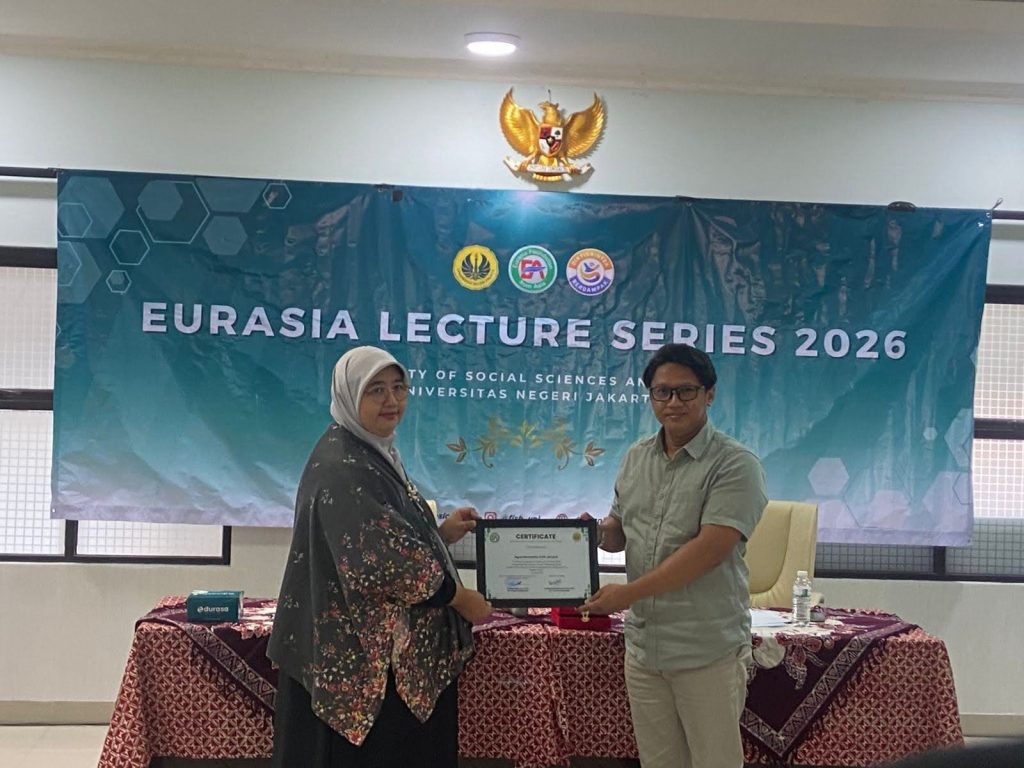
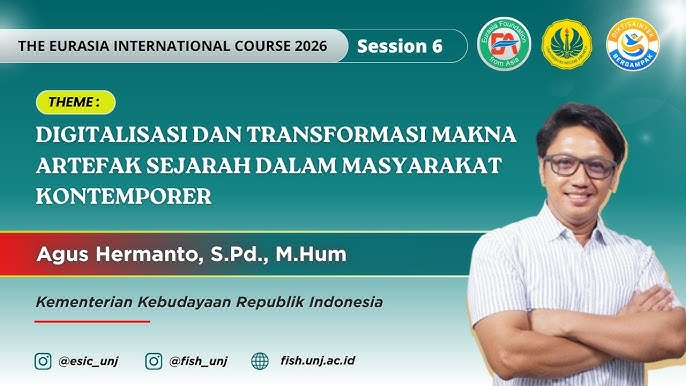
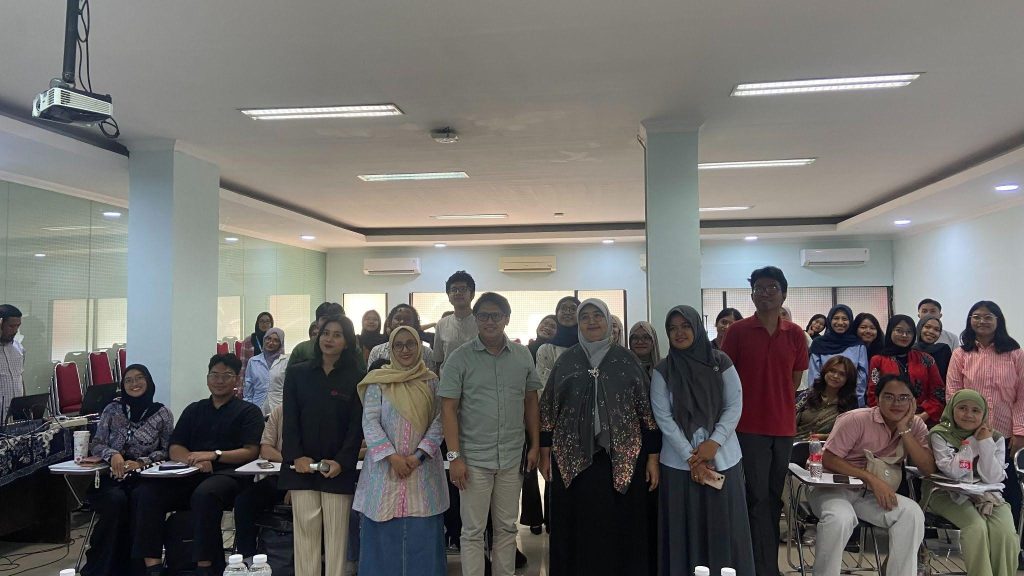
Jakarta, April 20, 2026 — The Eurasia International Course (EIC) 2026 continued its academic discussion series with its sixth session, highlighting the theme Digitalization and the Transformation of Historical Artifacts’ Meaning in Contemporary Society. Held at the Multipurpose Room, Building K, Faculty of Social Sciences and Law (FISH), Universitas Negeri Jakarta (UNJ), the session featured Agus Hermanto, S.Pd., M.Hum., Head of the Sub-Directorate of Historical Preservation at the Ministry of Culture of the Republic of Indonesia, as the keynote speaker.
In his presentation, Agus Hermanto emphasized that digitalization has become an essential step in preserving history amid rapid technological development and social change in modern society. According to him, history is not merely a collection of stories from the past, but a living narrative that must continue to be presented in ways that remain relevant in the contemporary era.
Agus explained that digitalization opens new opportunities for managing and utilizing historical artifacts through technologies such as 3D scanning, high-resolution photography, and digital databases. Through these technologies, artifacts are no longer confined to the physical space of museums but can be accessed by the wider public.
He further noted that digitalization is built upon three main pillars: digital conversion, public accessibility, and preservation. These three aspects are considered capable of transforming the way people interact with history, shifting from passive observation to a more interactive and immersive experience.
“Visitors no longer only see history; they can also experience it through virtual tours, online exhibitions, and 360-degree technology,” Agus stated.
As examples of implementation, Agus highlighted the Museum Cagar Budaya platform, which provides online access to collections, along with other innovations such as digital history applications, audiovisual media, and the SIREL Heritage platform. These platforms are also seen as effective approaches to reaching younger generations, particularly Gen Z and millennials.
Nevertheless, Agus also reminded participants that digitalization brings several challenges, including issues of content authenticity, technological gaps, and the sustainability of data storage. Therefore, source verification, metadata management, and long-term storage systems are crucial aspects that must be carefully addressed.
Through this session, participants gained a deeper understanding that digitalization not only plays a role in preserving historical artifacts but also strengthens the nation’s cultural identity amid the currents of globalization. The session also reaffirmed the importance of collaboration among the government, cultural institutions, academics, and younger generations in ensuring that historical heritage remains alive and relevant for contemporary society.