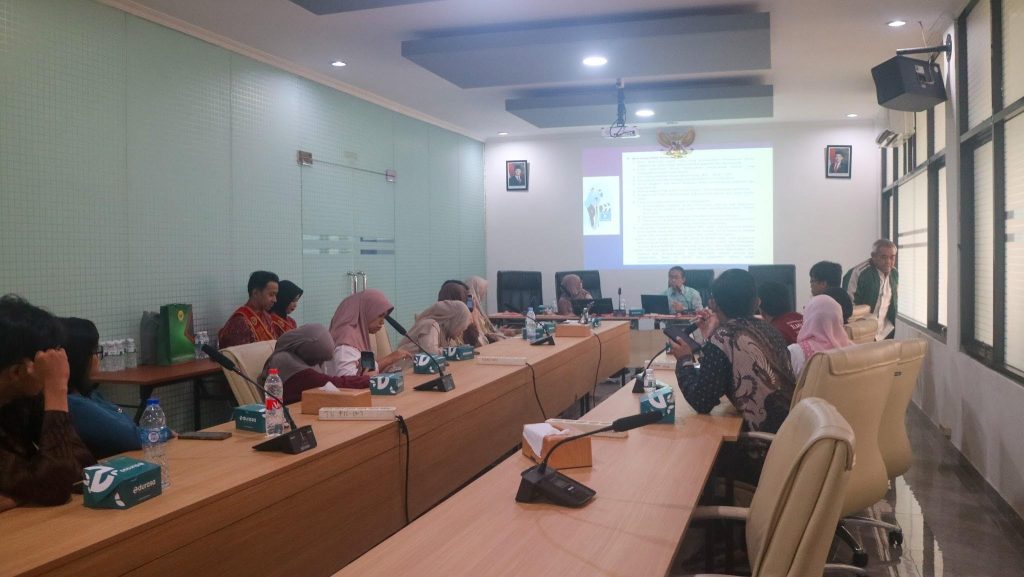
 During the socialization session, Sakhroji, S.H., M.H., Member of Bawaslu DKI Jakarta, presented an overview of the 2026 Election Law Enforcement Debate Competition. His presentation covered the competition's objectives, implementation mechanisms, participant requirements, and the importance of mastering contemporary electoral issues in promoting a healthy democratic culture. He emphasized that the competition is intended not only as an academic contest but also as a means of strengthening students' understanding of election supervision and the implementation of election law enforcement within Indonesia's democratic system.
The session attracted enthusiastic participation from six students from the Department of Pancasila and Civic Education, three students from the Department of Communication Studies, and four students from the Department of Law. Participants actively engaged in discussions and raised questions regarding the competition's technical aspects as well as effective strategies for constructing persuasive legal arguments in electoral debates.
 Through this initiative, FISH UNJ reaffirmed its commitment to cultivating an academic ecosystem that supports student competency development through both classroom learning and participation in prestigious national competitions. The upcoming internal selection process and intensive coaching program are expected to produce outstanding student representatives who are well prepared to compete in the 2026 Election Law Enforcement Debate Competition.
This initiative also contributes to the achievement of the United Nations Sustainable Development Goals (SDGs), particularly SDG 4 (Quality Education) by enhancing educational quality and student competencies, and SDG 16 (Peace, Justice and Strong Institutions) by strengthening young people's understanding of democracy, the rule of law, and electoral integrity. Furthermore, the program aligns with Indonesia's Higher Education Key Performance Indicator (IKU) 2, which promotes meaningful student learning experiences beyond the classroom through active participation in competency development programs and national academic competitions.
Penulis: AF
Editor: TEAM FISH MEDIA CENTER 2026