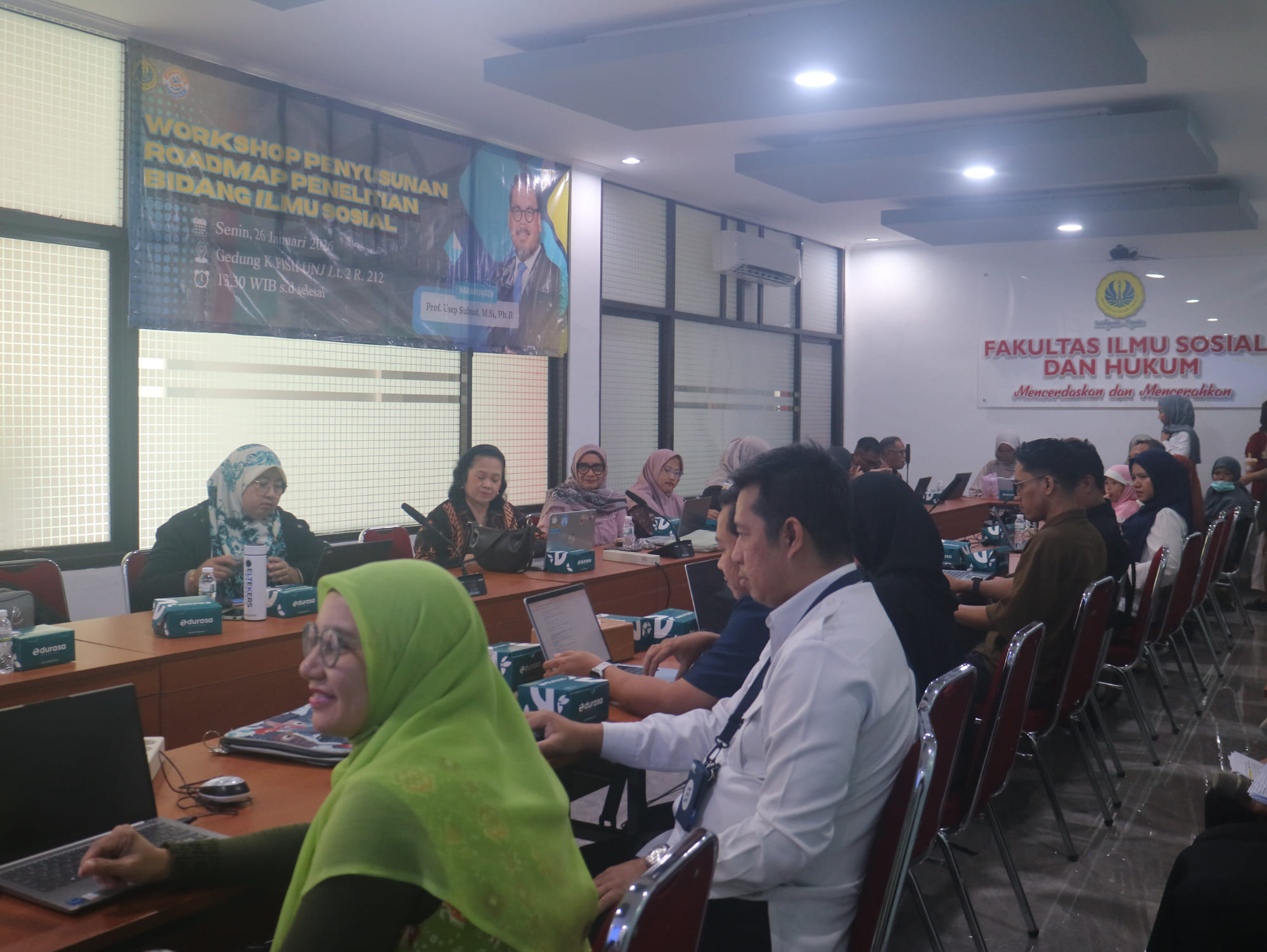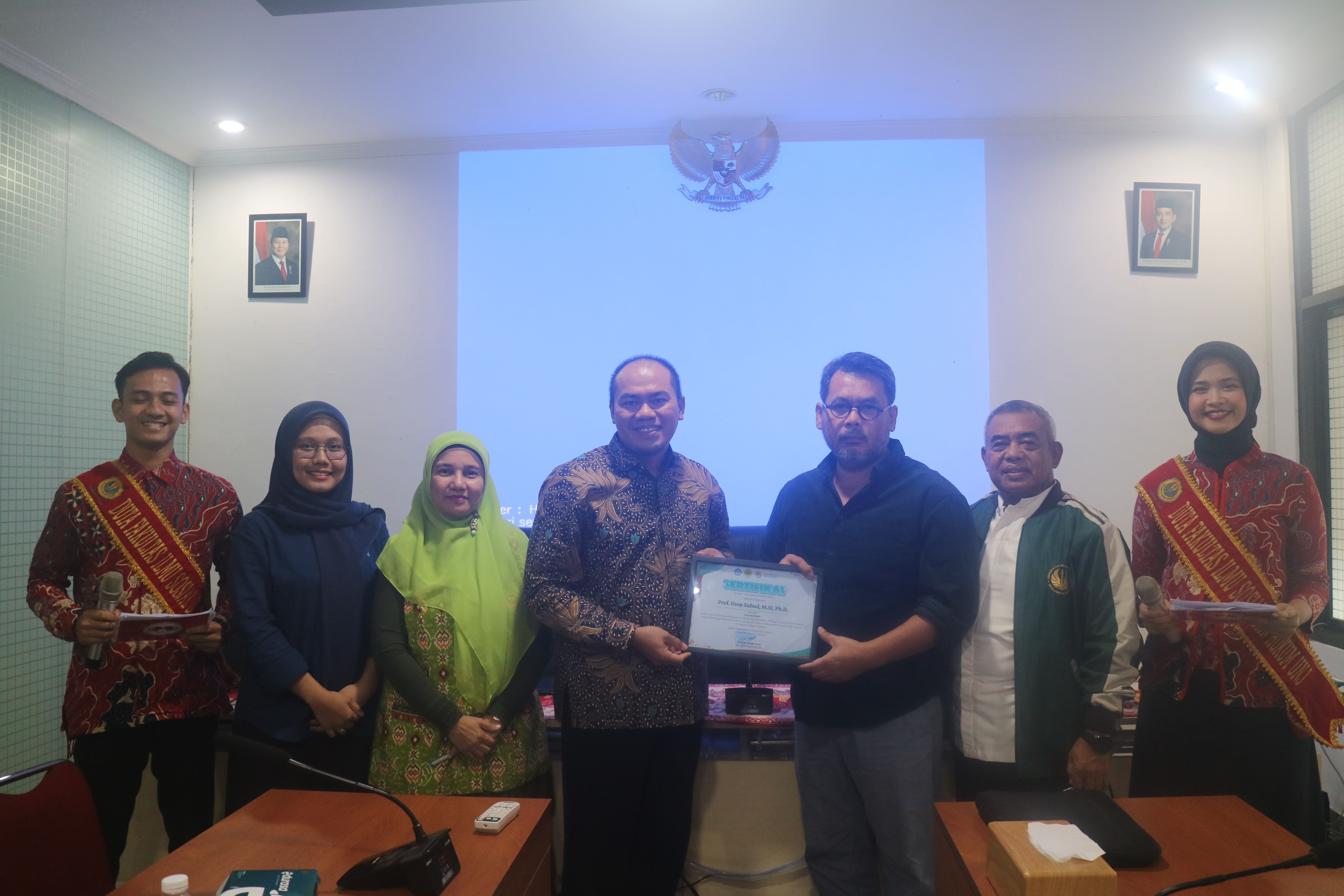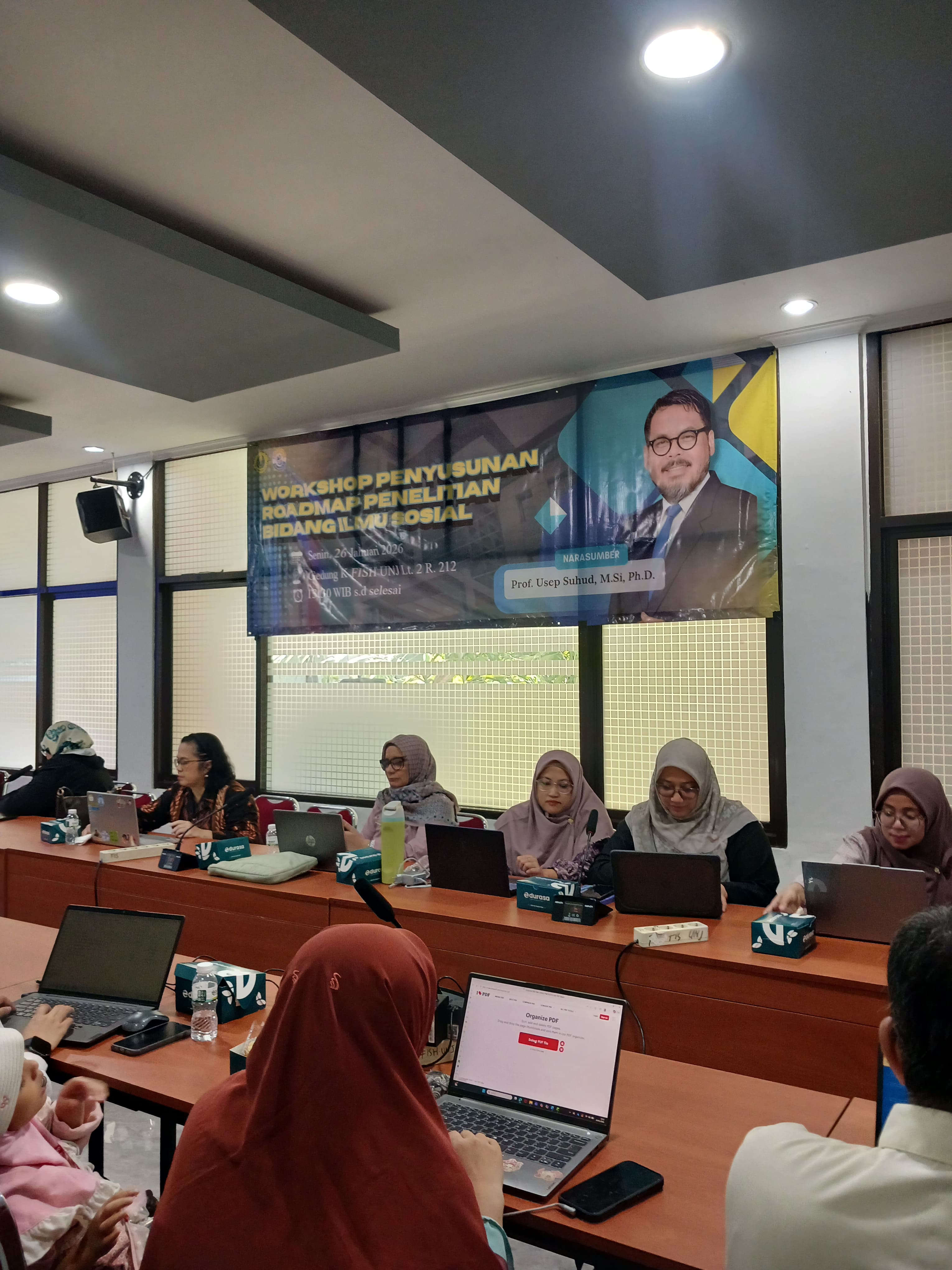
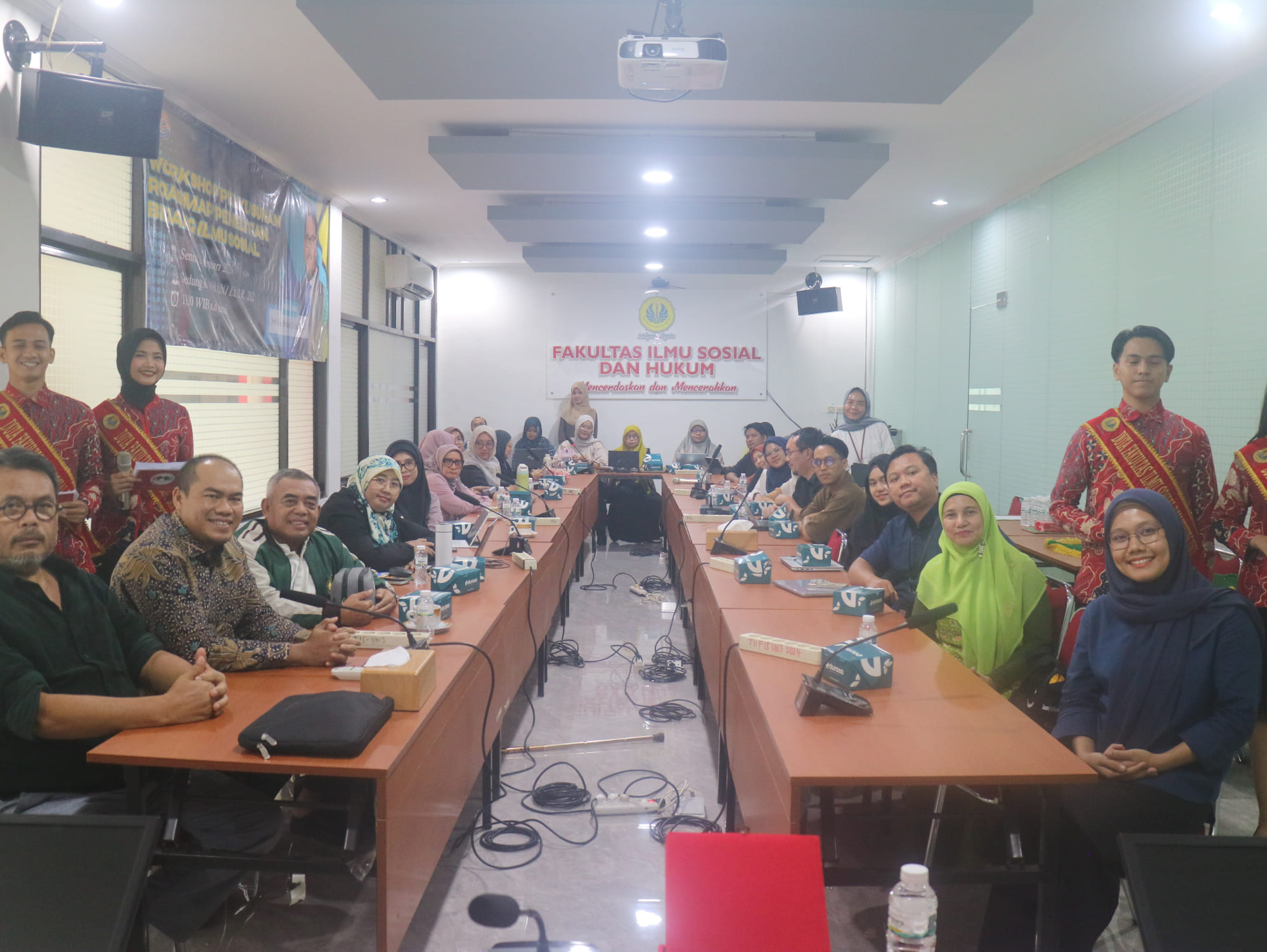
Jakarta, January 26, 2026 – The Faculty of Social and Law (FISH), Universitas Negeri Jakarta (UNJ), held a workshop on Developing Research Roadmaps in the Social Sciences as a strategic effort to strengthen the direction and quality of faculty research. The event was held in Room 212, FISH UNJ Campus A, and featured academic staff from various study programs, with a distinguished speaker in the field of social science research. The workshop aimed to develop an integrated, sustainable research roadmap aligned with FISH UNJ’s vision of academic excellence.
The workshop featured Prof. Usep Suhud, M.Si., Ph.D., Professor at the Faculty of Economics and Business and one of the most productive Scopus-indexed authors over the past three years, as the main speaker. His participation enriched the discussion by offering an interdisciplinary perspective on sustainable research planning.
The event was officially opened by the FISH UNJ Ambassador and followed by a welcoming address from the Dean of FISH UNJ, who reaffirmed the faculty’s commitment to strengthening the research ecosystem for lecturers. “This activity is expected to help lecturers conduct research in a more focused and sustainable manner,” said Firdaus Wajdi, Ph.D., Dean of FISH UNJ. His statement underscored the importance of a research roadmap as a strategic instrument for academic development.
Main session was moderated by Lona Syafana Pasya, S.Sos., M.Si., as Prof. Usep Suhud began his presentation by highlighting the relationship between lecturers’ highest educational qualifications and the courses they teach. Disciplinary linearity was considered to have a significant influence on research depth. Alignment between academic background, teaching assignments, and research topics was viewed as a key academic asset.
He further emphasized the importance of specifying research areas from the early stages of planning. Overly broad research scopes were seen as risking a loss of focus and scientific contribution. “When designing research, the field must first be specified and not too broad,” he stressed, making this point a central message of his presentation.
The presentation then outlined the technical stages of preparing a research roadmap. Prof. Usep Suhud proposed four main steps as a practical framework: determining research topics, developing relevant theoretical frameworks, transforming theoretical concepts into measurable indicators, and constructing research instruments.
In addition to roadmap development, Prof. Usep Suhud also discussed the use of digital technology as a research support tool. Artificial intelligence–based tools were seen as helpful at the initial stages of topic formulation and data processing. Such technologies can assist with literature mapping, conceptual framework development, and efficient exploration of research variables. AI was positioned as an academic aid rather than a substitute for critical thinking.
He also stressed the importance of academic ethics in the use of digital technology. Data validation and interpretation of research findings remain the responsibility of the researcher. Responsible use of AI is expected to enhance research productivity without compromising scientific quality.
The presentation further addressed the urgency of maintaining thematic consistency in research. A roadmap was framed not merely as an administrative document but as a guide for sustainable scholarly development. Consistency in research themes enables lecturers to gradually build academic expertise.
The discussion and question-and-answer session proceeded interactively, with active participation from attendees. Questions focused on aligning research roadmaps with institutional policies and exploring opportunities for cross-program collaboration. The discussion reflected strong enthusiasm among the lecturers for strengthening research planning, with the moderator ensuring it remained relevant to the workshop’s objectives.
This workshop reaffirmed FISH UNJ’s position as a faculty oriented toward structured research development. The research roadmap approach is regarded as a strategic method to improve lecturers’ scientific productivity. Strengthening research quality is also expected to enhance the institution’s national reputation. FISH UNJ reiterated its commitment to fostering a research culture grounded in mature, sustainable academic planning.
Author: NA, SA, CKG, & JRPS
Editor: TEAM FISH MEDIA CENTER 2026